
Our Insights
Pivoting Namibia’s Green-Hydrogen Strategy
Reset after RWE’s exit: pivoting Namibia’s green-hydrogen strategy to bankable, domestic-first demand
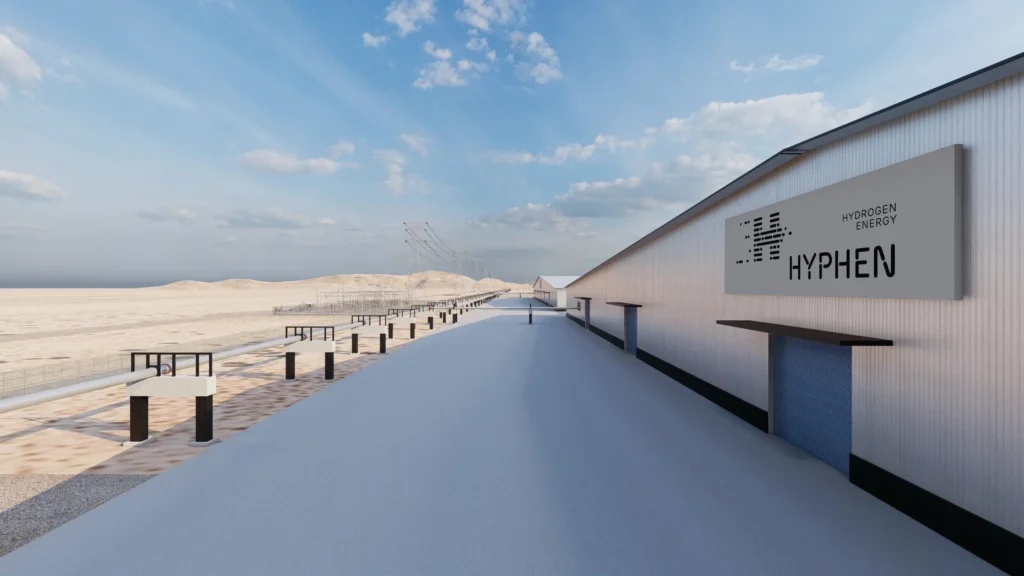
German power utility RWE withdrew from Hyphen’s non-binding off-take memorandum of understanding (MoU) on 29 September 2025, citing slower than-expected European demand (Reuters, 29 Sept 2025). RWE’s decision is not the end of our hydrogen story. It is a timely nudge to recalibrate the plot. After all, green hydrogen was never going to be a straight line. The global market is softer, financing is choosier and European demand signals are slower than the brochures promised. The International Energy Agency (IEA) now sees 2030 low emissions hydrogen output at about 37 Mt – down nearly a quarter from last year’s estimate – and only a small share of announced capacity has reached final investment decision (IEA, 12 September 2025; Reuters, 12 September 2025). In short: the export super-highway is not yet built.
For Namibia, that is not failure. It is option value. We should use it.
First, frame the facts. RWE’s exit removes a prospective buyer of up to 300,000 tonnes per annum (tpa) of green ammonia. The company points to slower-than expected European uptake. Operators say the project’s fundamentals remain intact and that other off-takers can be found in time. Meanwhile, the ethical debate continues: civil society argues the site overlaps ancestral Nama land inside the Tsau//Khaeb National Park; companies deny any causal link between rights
claims and RWE’s move (Hydrogen Insight, 29 September 2025; Wall Street Journal, 3 October 2025). Investors will read this as both market risk and
legitimacy risk – each manageable, but only with deliberate action.
Second, look home before sailing abroad. In September, Namibia generated about 40% of its electricity and imported the balance. Reliability is our binding constraint. The Omburu battery – due online in late 2025 – adds flexibility to integrate more solar and wind and to shave peak imports (NamPower BESS fact
sheet, September 2025). That grid flexibility is the same muscle hydrogen needs.If we build that muscle for our own system first, export options will improve, not worsen.
Third, align with base rates. The IEA’s latest review is clear: demand-side policy lags supply ambition. Announcements outpace bankable off-take; national
transposition of EU hydrogen rules and certification delays still muddy the path (Energy Intelligence, 9 October 2025). In this environment, pure export mega
projects load sovereign risk without clear revenue floors. A phased, domestic-first off-take provides a sturdier base.
A pragmatic pivot starts with the off-take pyramid. We should prioritise domestic and regional uses that are close to cash and reduce imported fuels. Mining and
haulage are obvious early movers: H₂-ready or ammonia-cracking gensets can support power at mine sites; original equipment manufacturer (OEM)
partnerships can trial fuel-cell or hydrogen-ICE haul trucks on short, repeatable routes where refuelling is controllable. Our ports at Walvis Bay and Lüderitz can become early clean-fuel hubs by converting port equipment and piloting bunkering for coastal shipping aligned with tightening International Maritime Organisation (IMO) rules. Limited hydrogen – whether directly or via ammonia to-power – can also serve in peaking power applications as insurance against drought-driven Southern African Power Pool (SAPP) shortages, governed by strict cost caps and dispatch rules. These near-market loads can underwrite a 50–100 MW first phase while preserving the option to scale for export as policies and prices harden.
The public sector should fund public goods, and the market should take product risk. A government-backed infrastructure special-purpose vehicle can own and
operate multi-user assets – desalination, grid reinforcements, roads and port upgrades – under regulated, transparent tariffs, open to all qualified producers. Electrolysers and ammonia plants should remain in the competitive sphere. This approach reduces duplication, improves social acceptance and limits sovereign exposure to product price volatility. The EU–Namibia Global Gateway framework
was designed for precisely this class of enabling infrastructure.
Legitimacy must be engineered, not asserted. Free, prior and informed consent procedures should be auditable and co-drafted with Nama and other affected
communities. A transparent land-use registry for Tsau//Khaeb should define biodiversity buffers and require cumulative-impact monitoring, not just single
project assessments. Community benefit-sharing needs statutory footing and front-loaded delivery, so promises translate into early, visible gains. This is not charity; it lowers project risk premiums and stabilises timelines.
Price discipline is policy. Any sovereign support – guarantees, land leases, tax incentives – should be paired with off-take floor prices or take-or-pay commitments from creditworthy buyers. Contracts must include step-out clauses if certification, shipping or EU rules shift materially, so public exposure does not widen without consent. Local content should build Namibian capability without pushing project costs beyond competitive thresholds. In a world where only a fraction of announced projects reach FID, the cheapest mistake is the one avoided.
Regional hedging can amplify resilience. The SAPP should pilot trading of green attributes for electrons used in electrolysis, enabling producers to firm power supply with regional certificates rather than relying solely on physical imports. On the logistics side, upgrades along the Zambezi corridor would improve rail reliability for moving modular product to ports, an execution hedge when shipping slots are tight and port congestion spikes.
As the country advances uranium and offshore oil developments, we should keep the wires clean. Those cycles can finance infrastructure and skills, but their risk
profiles and clocks differ from hydrogen. Cross-collateralising may feel expedient; it usually ends in contagion. Discipline now preserves optionality later.
Seen through standard decision filters, the pivot holds up. It fits national objectives by reducing import dependence, supporting jobs and building skills; it preserves legitimacy by embedding free, prior and informed consent and biodiversity safeguards; it delivers impact under uncertainty by sequencing modest first phases that generate cash and learning without risking ‘ruin’; it maximises reversibility and option value because shared infrastructure is useful across scenarios; it aligns with base rates from the IEA and market evidence; and it is executable because pilot off-take can sit where Namibia already works –
mines and ports – backed by a grid gaining flexibility from the Omburu battery and further independent power producer additions. The headline takeaway is simple: pause the mega-export story; build a domestic first platform that earns cash, trust and skills – then scale. Europe will still need clean molecules, but not on a timetable we control. If we prove reliability at home, keep costs honest, and treat communities as partners, Namibia’s hydrogen can travel far – without betting the country on a market still finding its feet.